
© 2019 JOY Goat Development Programme


This site does not use cookies

Long-term
The survival of the breeding programme depends on the breeders’ groups which will oversee the selection process. Each cluster of villages will oversee the choice of bucks and their rotation between the villages within that cluster. Occasionally exchange of bucks will occur between clusters, arranged through higher level groups.
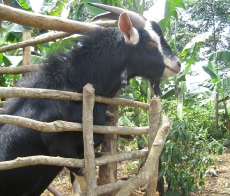
50% bucks
The three ‘improver bucks’ described above cover a total of 4½ years. At the end of this time a majority of breeders will have goats of around 50% dairy blood. At this point the programme will stop bringing in more bucks; but will continue to support the farmer’s groups, that will choose the best available buck of approximately 50% dairy blood.
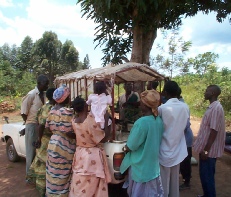
Subsequent placed males
After the male has been in place for around 18 months, there will be daughters ready for mating. So the first male is moved on to another village, and an unrelated male is brought in. When this male has been in place for a further 18 months, a third male will be brought.
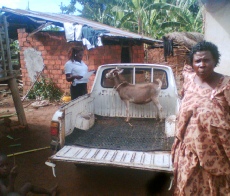
Initial Buck
The bucks placed are generally 75% dairy blood -